

How to Qualify Trade Show Visitors Without Being Pushy (And Still Get Better Leads)

How to Qualify Trade Show Visitors Without Being Pushy (And Still Get Better Leads)
Explore Giveaway GiftsKey Takeaways
-
Visitor qualification works best when it feels like a conversation, not a screening process.
-
Lead quality matters more than lead volume for post-event ROI and sales conversion.
-
Permission-based questions and observation help exhibitors qualify visitors without sounding pushy.
-
Giveaway gifts should support conversations, not replace them or act as bait.
-
Well-trained, well-rested booth teams qualify visitors more effectively than scripted sales reps.
Every exhibitor has felt it—that split second when someone steps into your booth and you’re torn between two fears. Engage too fast, and you risk sounding pushy. Hang back too long, and a high-value prospect walks away unnoticed.
At busy trade shows, visitor qualification isn’t just a sales skill—it’s a survival skill. Booth teams are expected to greet hundreds of attendees, collect leads, explain offerings, and still leave a positive brand impression. The problem? Most exhibitors are taught what to say, not how to qualify visitors without making them uncomfortable.
The reality is that modern buyers—especially in the US trade show landscape—don’t want to be sold to. They want to be understood. They want relevance, respect, and control over the conversation. Exhibitors who master non-pushy booth sales don’t just generate more leads—they generate better ones.
This guide explains how to qualify trade show visitors naturally, respectfully, and effectively—without sounding salesy. It also shows how subtle tools like premium giveaway gifts can quietly support qualification conversations instead of replacing them.
When paired with thoughtful booth gifting strategies such as custom chocolate giveaway gifts for trade shows , this approach helps exhibitors attract attention without pressure.
For B2B audiences, premium giveaway gifts signal credibility and help position your brand as high-value and trustworthy. Read more →
Why Visitor Qualification Feels So Awkward at Trade Shows
Trade shows bring together wildly different attendee types under one roof. Serious buyers, early-stage researchers, students, competitors, job seekers, vendors, and casual browsers all walk the same aisles—often wearing identical badges.
Yet many booth teams still rely on outdated tactics. Rapid-fire pitching, scanning badges before conversations, or asking blunt qualifying questions may collect contact details, but they rarely uncover true intent.
Research published by the Center for Exhibition Industry Research shows that attendees are far more likely to remember exhibitors who focus on understanding needs rather than pushing products. Similarly, insights from Harvard Business Review consistently highlight that consultative selling builds trust faster than persuasive selling in high-noise environments.
In US trade shows especially, visitors are accustomed to choice. They can disengage instantly. If a booth interaction feels transactional or aggressive, they simply move on.
This is why exhibitor conversation strategy matters as much as booth design. Visitor qualification is not about filtering people out—it’s about identifying who deserves deeper attention while still making every interaction feel respectful.
The Core Problem: More Booth Conversations, Fewer Conversions
Many exhibitors walk away from events proudly reporting hundreds or even thousands of leads. Weeks later, sales teams discover that only a fraction of those leads convert into meaningful conversations.
This disconnect happens because most trade show leads are never qualified at the booth.
- Contacts are collected without understanding buying authority or decision timelines
- Booth staff spend too much time with low-intent visitors
- Every attendee receives the same explanation regardless of intent
- Giveaways are used as bait instead of as conversation tools
According to data summarized by Statista and buyer-behavior research from Gartner , lead quality consistently outperforms lead quantity when it comes to post-event ROI.
Yet many exhibitors hesitate to qualify visitors directly because they fear sounding rude, damaging brand perception, or killing the vibe at their booth.
This fear often leads to the opposite problem—pleasant but shallow conversations that never clarify whether a visitor is a potential buyer.
The Opportunity: Reframing Visitor Qualification
Visitor qualification should not feel like interrogation. Instead, it should feel like guidance.
The goal is not to judge the visitor. The goal is to decide the right depth of conversation. That decision can often be made within the first 60 to 90 seconds using simple cues, contextual questions, and conversational flow.
When done well, qualification becomes invisible. Visitors don’t feel screened—they feel understood.
This approach aligns naturally with premium, thoughtful booth experiences. Brands that use refined touchpoints such as corporate chocolate gifting solutions tend to attract higher-quality interactions without forcing engagement.
Corporate Giveaway Gifts for Expo, Exhibition & Trade Shows
Attract attention and drive brand recall with premium corporate giveaway gifts featuring personalized chocolate branding for expos and trade shows.
Explore Giveaway Gifts NowThe Non-Pushy Qualification Framework: Five Core Pillars
1. Permission-Based Engagement
Non-pushy booth sales start by giving visitors control. Simple phrases like “Would it help if I shared a quick overview?” or “Happy to explain—what caught your eye?” lower defenses immediately.
Research discussed in MIT Sloan Management Review shows that perceived autonomy significantly increases trust and engagement.
2. Observation Before Interrogation
Effective qualification often starts before the first question. Notice where visitors pause, what they read, and how they interact with your display.
3. Contextual, Not Checklist Questions
Avoid checklist-style qualification. Instead of asking about budgets or authority, use contextual prompts like “Are you exploring ideas or evaluating solutions right now?”
4. Micro-Value Before Macro Pitch
Offer a relevant insight before explaining your full offering. If the visitor leans in, you’ve earned the right to go deeper.
5. Graceful Exits Preserve Brand Trust
Not every visitor is a fit. Ending conversations politely maintains goodwill and frees your team to focus on higher-intent prospects.
Premium takeaway items such as branded chocolate gift boxes work especially well here, reinforcing positive recall without pressure.
What the Data Confirms About Trust-Based Booth Conversations
Harvard Business Review consistently notes that buyers respond more positively when sales conversations feel diagnostic rather than persuasive.
Gartner research also shows that B2B buyers often complete more than half of their decision-making process before speaking with vendors, making booth conversations more about alignment than persuasion.
Studies from CEIR further reveal that attendees who feel understood during booth interactions report higher brand recall and greater willingness to follow up after the event.
This is why non-pushy visitor qualification is not passive. It is deliberate, strategic, and highly effective.
For operational alignment, exhibitors often pair this approach with practical booth readiness resources like a trade show day checklist for booth teams .
Practical How-To: What to Say, When to Say It, and Why It Works
Once the mindset and framework are clear, execution becomes far easier. The objective is not to ask more questions, but to ask better questions at the right moment in the conversation.
Non-pushy visitor qualification relies on questions that align with how buyers already think. These questions feel natural, respectful, and purposeful rather than sales-driven.
High-impact, low-pressure qualification questions include:
- “What brought you to this show?”
- “Are you actively evaluating solutions or just exploring options today?”
- “Who else is usually involved when decisions like this are made?”
- “What has been the biggest challenge so far?”
Each of these questions reveals intent, urgency, and context without forcing the visitor into defensive mode. According to insights published by Harvard Business Review , people are significantly more open when conversations follow their internal decision-making logic rather than a seller’s agenda.
Equally important is recognizing when to stop. If a visitor gives short answers, avoids eye contact, or signals low intent, a graceful exit protects both brand perception and staff energy.
For guidance on strong opening moments that naturally lead into qualification, this resource on what to say in the first 10 seconds at a booth provides helpful context.
Budget-friendly giveaway gifts can still feel premium when chosen strategically—focus on usefulness over quantity. Read more →
Real-World Booth Scenarios and How to Qualify in Each
Scenario 1: The Serious Buyer in a Rush
These visitors move quickly, ask pointed questions, and often glance at their watch or phone. They already know what they are looking for.
The right approach is to acknowledge time constraints, ask one clarifying question, and offer a next step rather than a full pitch.
Example: “Looks like you’re short on time—are you looking for something specific today?”
If there is alignment, capture key details and promise a follow-up conversation. Trapping them in a long demo often works against conversion.
Scenario 2: The Curious Browser
These attendees linger, observe displays, and handle products but rarely ask direct questions.
Observation-based openings work best here. For example, “Many people stopping here are planning upcoming events—does that sound like you?”
If intent remains low, this becomes an ideal moment to provide a premium takeaway rather than pushing deeper conversation.
Scenario 3: Peak-Hour Booth Traffic
During rush periods, qualification must be efficient. A one-sentence positioning statement followed by a single intent question helps staff route visitors appropriately.
Traffic flow strategies outlined in managing booth traffic during peak hours complement this approach well.
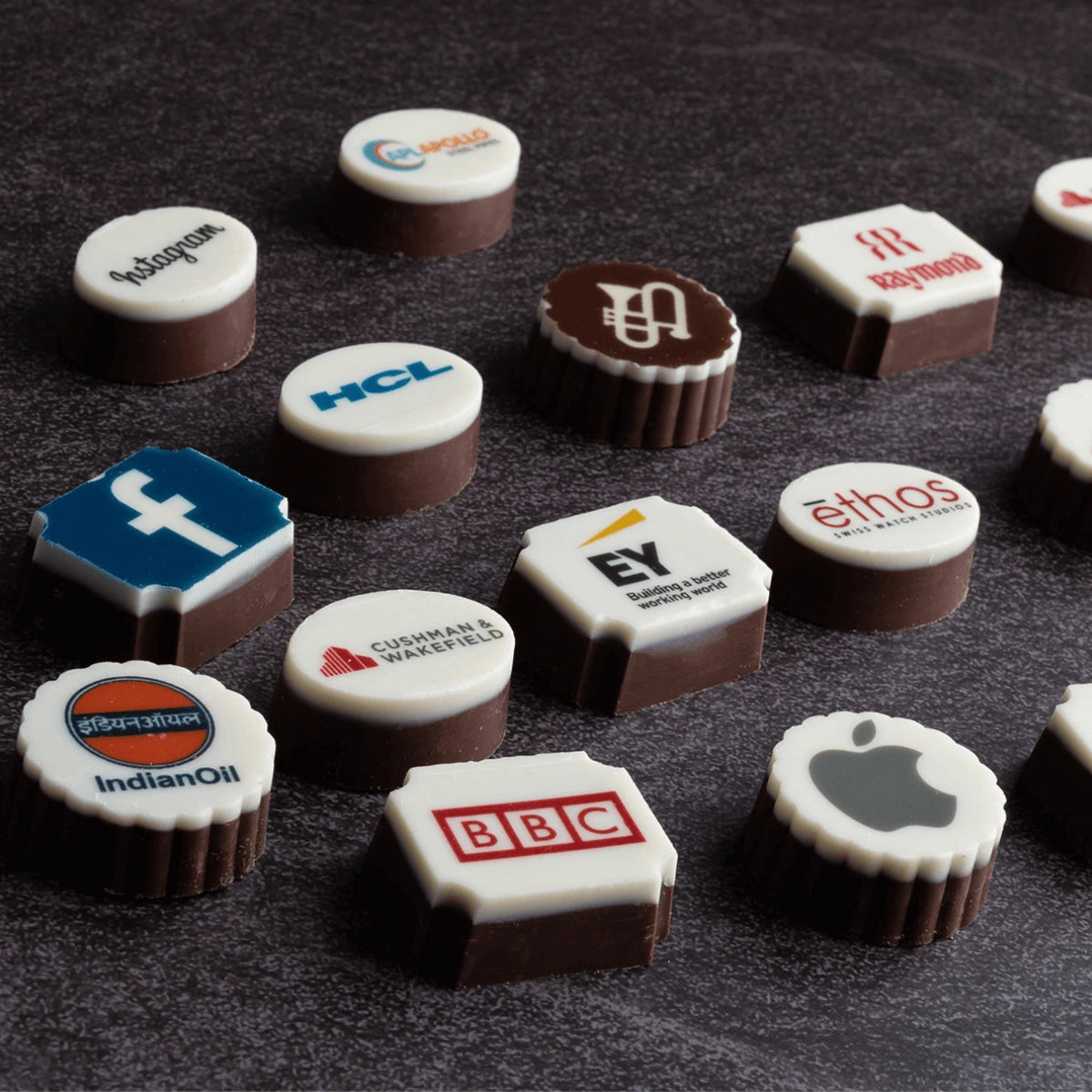
Personalized Corporate Giveaway Chocolates
Custom-branded chocolate giveaway gifts designed to boost visibility at exhibitions and corporate events.
Customize for Your BrandUsing Giveaway Gifts as Qualification Tools, Not Swag Bait
Most exhibitors treat giveaways as magnets. Strategic exhibitors treat them as filters.
Low-value swag attracts volume with little intent. Thoughtful, premium giveaway gifts naturally slow conversations down and signal brand positioning.
Custom-printed chocolates presented in elegant keepsake boxes create a pause—a moment of curiosity that opens space for a meaningful question rather than a pitch.
Effective exhibitors avoid handing gifts immediately. Instead, they:
- Offer giveaways after a short conversation
- Use gifts as a thank-you rather than a hook
- Match gift value to visitor intent
For example, quick browsers may receive a small branded chocolate, while qualified prospects receive a premium box that reinforces recall.
This tiered approach supports qualification while maintaining warmth. It also aligns with research showing edible, premium gifts outperform generic swag in memory retention and follow-up response.
Exhibition-focused options such as six-piece corporate chocolate gift boxes are often used in this role-based gifting strategy.
Aligning Booth Staff, Energy, and Visitor Qualification
Even the best qualification questions fail if booth teams are exhausted or misaligned.
High-performing booths assign clear roles:
- Greeters initiate permission-based engagement
- Qualifiers handle discovery conversations
- Closers manage deep dives and next steps
Rotating these roles throughout the day prevents burnout and maintains conversation quality. Detailed guidance on this approach is outlined in staff rotation and energy management at trade shows .
Training should emphasize listening skills, graceful exits, and recording contextual notes rather than just scanning badges.
A lead tagged with “planning corporate gifting for distributors in Q3” is far more valuable than a contact with no insight.
Trends and Expert Insight: The Future of Visitor Qualification
Trade shows are becoming increasingly experiential and less transactional.
Buyers now expect personalization, respect for their time, and immediate value from booth conversations.
As experiential marketing continues to evolve, non-pushy booth sales strategies are becoming the norm. Research from Gartner and thought leadership from MIT Sloan Management Review emphasize that trust-first interactions consistently outperform persuasion-first models.
In crowded event environments, qualification is no longer about pressure. It is about clarity.

Call to Action - Chocolate Box
📦 Box: Logo + bold CTA — “Become Our Distributor” / “Partner With Us”
📝 Message Inside: Contact details + QR code to sales deck or lead form
🍫 Chocolates: One with “Let’s Partner”, one with logo
🎯 Purpose: Turns a premium gift into a partnership trigger—driving real business inquiries, not just brand recall.
Make it for your BrandConclusion
Qualifying trade show visitors without being pushy is not about saying less. It is about saying the right things at the right time.
When exhibitors shift from pitching to understanding, conversations become easier, leads become stronger, and follow-ups become far more effective.
- Permission beats pressure
- Intent matters more than volume
- Giveaways should support conversations, not replace them
- Staff alignment amplifies results
Done well, visitor qualification feels invisible to attendees but invaluable to your sales pipeline.
Brands that pair this approach with thoughtful corporate gifting experiences often achieve stronger brand recall long after the event ends.
For end-to-end booth readiness, this trade show day checklist for booth teams provides a useful operational reference.
Choose giveaway gifts that naturally attract attention at exhibitions—items that spark curiosity help drive higher booth footfall. Read more →
Key Information
| Aspect | What It Means at Trade Shows | Why It Matters for ROI |
|---|---|---|
| Visitor Intent | Understanding whether someone is browsing or evaluating | Helps prioritize high-value conversations |
| Non-Pushy Engagement | Asking permission-based, contextual questions | Builds trust and keeps visitors engaged |
| Lead Quality | Fewer but better-qualified leads | Improves follow-up efficiency and conversions |
| Booth Conversations | Dialogue instead of pitching | Increases brand recall and responsiveness |
| Giveaway Strategy | Tiered, thoughtful gifts | Filters serious prospects from casual visitors |
| Staff Roles | Clear roles and rotation | Prevents burnout and missed opportunities |
| Data Capture | Contextual notes, not just contact info | Enables meaningful post-show follow-up |
FAQs
1. How do you qualify trade show visitors without being pushy?
Qualifying trade show visitors without being pushy starts with permission and curiosity. Instead of launching into a pitch, ask open, contextual questions like why they’re attending the show or what they’re exploring. This keeps conversations natural, respects visitor intent, and helps exhibitors identify serious prospects without making attendees uncomfortable.
2. What questions should booth staff ask to qualify leads effectively?
Booth staff should ask questions that reveal intent, timing, and challenges rather than budget or authority upfront. Questions such as “Are you actively evaluating solutions or just exploring today?” or “What challenge are you hoping to solve?” help qualify leads while maintaining a conversational, non-salesy tone.
3. Why is lead quality more important than lead quantity at trade shows?
Lead quality determines whether post-event follow-ups turn into real opportunities. A smaller set of well-qualified leads is easier for sales teams to convert than hundreds of unqualified contacts. High-quality trade show leads usually result in better ROI, faster sales cycles, and stronger long-term relationships.
4. How can giveaways help with trade show lead qualification?
Giveaways can support lead qualification when used strategically. Premium, thoughtful gifts encourage meaningful conversations and help exhibitors differentiate serious prospects from casual visitors. Instead of handing gifts immediately, offering them after a short interaction reinforces engagement and improves brand recall without attracting low-intent traffic.
5. What does non-pushy booth sales really mean?
Non-pushy booth sales focus on understanding rather than persuading. It means listening more than talking, offering value before pitching, and allowing visitors to control the pace of the conversation. This approach builds trust, keeps visitors comfortable, and leads to more productive trade show lead qualification.
6. How do you identify serious buyers quickly at a trade show?
Serious buyers often ask specific questions, reference timelines, or mention internal discussions. Observing behavior—such as focused reading or detailed questions—combined with one or two intent-based questions helps exhibitors identify high-value prospects within the first minute of interaction.
7. What should booth staff do with visitors who aren’t a good fit?
When a visitor isn’t a good fit, the best approach is a polite, respectful exit. Thank them for stopping by, offer a small takeaway if appropriate, and keep the interaction positive. This preserves brand goodwill while allowing booth staff to focus on higher-intent trade show visitors.
8. How does staff training impact trade show visitor qualification?
Staff training directly affects how confidently and naturally visitors are qualified. Teams trained in conversational questioning, active listening, and graceful exits perform better than teams using rigid scripts. Proper training ensures consistent messaging and improves the overall quality of trade show leads.
9. Can trade show qualification still work during peak booth hours?
Yes, qualification can be effective even during peak hours by simplifying conversations. A short positioning statement followed by one intent-based question helps route visitors quickly. This prevents overcrowding, reduces missed opportunities, and ensures serious prospects still receive attention.
10. How does non-pushy qualification improve post-event follow-up?
When leads are qualified with context—such as goals, timelines, or challenges—sales teams can personalize follow-ups. This increases response rates and shortens sales cycles. Non-pushy trade show lead qualification creates better data, stronger relationships, and more meaningful post-event conversations.
