

Trade Show Budget Breakdown: Where Companies Actually Spend—and Why It Matters

Trade Show Budget Breakdown: Where Companies Actually Spend—and Why It Matters
Explore Giveaway GiftsKey Takeaways
-
Most trade show budgets are won or lost in planning, not execution
Companies that define objectives first and allocate budgets intentionally outperform those that plan expenses in reverse order. -
Booth size rarely determines success—engagement does
Data shows that experience-driven touchpoints, trained staff, and meaningful conversations drive better ROI than larger booth footprints. -
Corporate giveaways deliver outsized impact when chosen strategically
Premium, consumable, and well-branded giveaways improve recall and follow-up rates despite accounting for a small share of total spend. -
Hidden costs and follow-up gaps are the biggest ROI killers
Logistics, labor, and post-event follow-up are frequently underestimated but play a decisive role in overall trade show performance. -
Measurement transforms trade shows from expenses into growth assets
Tracking qualified leads, cost per conversation, and brand recall enables smarter budgeting and stronger internal justification.
Trade shows often appear deceptively simple. A booth on the floor, a team ready to talk, a few giveaways, and the expectation that leads will follow. Yet for companies exhibiting in the United States, trade shows are among the most expensive and operationally complex marketing investments they make. What separates profitable exhibitions from costly disappointments is not how much is spent—but where that money actually goes.
Many exhibitors approach trade show budgeting with a narrow view, focusing heavily on booth space and design while underestimating the ripple effect of logistics, staffing, and engagement costs. As a result, trade show expenses frequently exceed projections, and leadership teams are left questioning the value of participation.
This trade show budget breakdown USA guide is designed to clarify that picture. By examining how companies truly allocate exhibition budgets, which costs are commonly overlooked, and how smarter planning leads to measurable ROI, decision-makers can move beyond guesswork and build exhibitions that perform.
From exhibition cost planning and staffing to marketing, follow-up, and corporate giveaway gifts for trade shows, every line item influences how a brand is experienced—and remembered—on the show floor.
High-ROI giveaway gifts balance cost with long-term usage, ensuring your brand stays visible after the event ends. Read more →
Why Trade Show Budgeting Is More Complex Than It Appears
Unlike digital marketing, where campaigns can be adjusted in real time, trade shows demand long-term commitment. Booth contracts are signed months in advance, logistics must be coordinated with venues, and teams are pulled away from daily responsibilities. This makes exhibition cost planning both rigid and high-risk.
Research published by Forbes highlights a consistent pattern: companies often underestimate total trade show expenses by focusing only on visible costs. Booth space may be the largest line item on paper, but freight, labor, travel, and post-event marketing can collectively rival or exceed it.
Another challenge is that trade show budgets vary significantly by industry and objective. A SaaS company attending a technology expo may prioritize demos and lead capture, while a manufacturing firm at an industrial exhibition may require heavier infrastructure. Despite these differences, the underlying cost categories remain surprisingly consistent across industries.
This is why experienced exhibitors frame budgets around impact rather than categories. They do not ask, “How much should we spend on a trade show?” Instead, they ask, “Which expenses directly support our goals, and which simply inflate our footprint?”
Corporate Giveaway Gifts for Expo, Exhibition & Trade Shows
Attract attention and drive brand recall with premium corporate giveaway gifts featuring personalized chocolate branding for expos and trade shows.
Explore Giveaway Gifts NowThe Core Issue: Most Companies Build Trade Show Budgets Backwards
One of the most common mistakes in event marketing budget planning is building the budget from fixed logistics outward rather than from outcomes inward. Many companies follow a predictable sequence: secure booth space, design the booth, arrange freight and staffing, and allocate whatever remains to marketing and engagement.
By the time decision-makers consider attendee experience, lead quality, or brand recall, the budget has already been constrained by fixed commitments. This often leads to impressive booth structures with limited interaction and few meaningful conversations.
The consequences are easy to spot. Exhibitors overspend on booth size while underinvesting in staff training. Giveaways are treated as cost centers rather than engagement tools. Marketing becomes reactive instead of strategic.
Insights discussed by Harvard Business Review reinforce that experience-driven touchpoints—not physical scale—have the strongest influence on memory and follow-up behavior. Yet many brands continue to equate visibility with value.
Without a clear trade show budget breakdown, companies struggle to identify which expenses drive ROI and which simply inflate costs.
The Six Core Pillars of Trade Show Expenses
While no two exhibitions are identical, most US-based exhibitors allocate their event marketing budget across six primary categories. Understanding these pillars is essential for realistic exhibition cost planning.
1. Booth Space and Registration (30–40%)
Booth space is typically the largest and least flexible expense. Costs include square footage rental, premium placement fees, and mandatory exhibitor registrations. High-traffic locations increase exposure but do not guarantee engagement.
Many seasoned exhibitors now downsize booth footprints and reinvest savings into interaction-focused elements. Tactical guidance on booth planning is outlined in How to Plan a Successful Trade Show Booth in the USA.
2. Booth Design, Build, and Graphics (15–20%)
This category includes booth fabrication or rentals, graphics, lighting, digital displays, and structural components. Design shapes first impressions, but ROI depends on functionality. Modular and reusable designs often deliver better long-term value than custom one-off builds.
3. Logistics, Freight, and Labor (10–15%)
Logistics costs are among the most underestimated trade show expenses. Freight shipping, drayage, union labor, storage, and handling fees can escalate quickly, particularly at large convention centers. These costs frequently cause budgets to exceed initial estimates.
4. Staffing, Travel, and Accommodation (10–20%)
Your booth team represents both a significant cost and a major opportunity. Expenses include flights, hotels, meals, training, and opportunity cost. Well-trained teams consistently outperform larger, unprepared ones.
Preparation strategies and staffing insights are detailed in How to Prepare Your Team for a Trade Show.
5. Marketing, Promotions, and Corporate Giveaway Gifts (5–12%)
This pillar is where many exhibitors underestimate impact. Marketing spend includes pre-show outreach, on-booth engagement tools, and corporate giveaway gifts for exhibitions.
Premium, consumable giveaways—such as custom printed chocolates—create sensory recall without adding clutter to an attendee’s bag. When used intentionally, they act as conversation starters rather than passive souvenirs.
Curated options designed for trade shows can be explored at giveaway gifts for expo and exhibition trade shows.
6. Post-Event Follow-Up and Measurement (3–5%)
Despite being critical to ROI, follow-up is often underfunded. CRM integration, email campaigns, and sales outreach convert booth conversations into revenue. Without this step, even a well-executed exhibition delivers limited business value.
Tracking performance metrics is explored further in Trade Show KPIs Every Exhibitor Should Track.
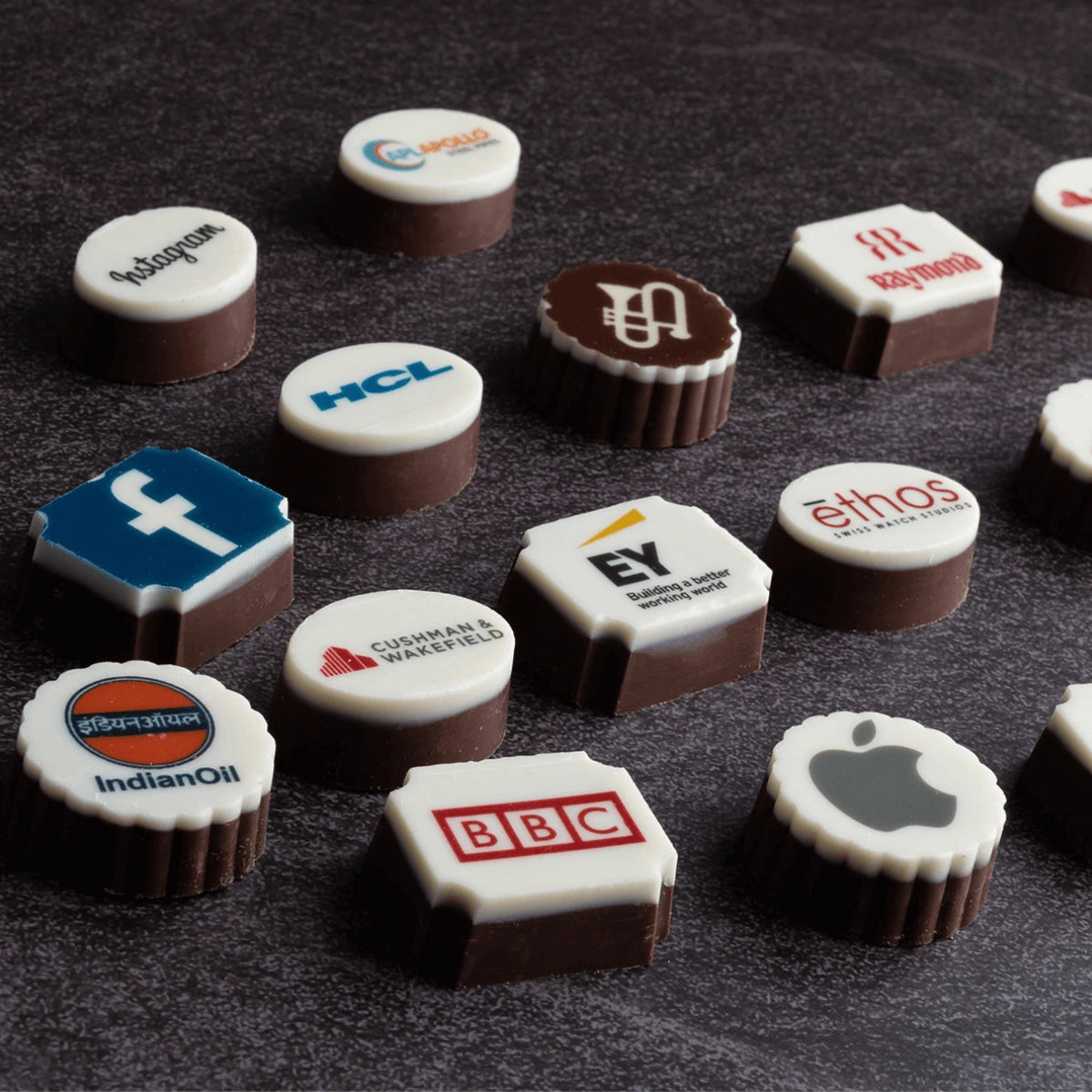
Personalized Corporate Giveaway Chocolates
Custom-branded chocolate giveaway gifts designed to boost visibility at exhibitions and corporate events.
Customize for Your BrandWhy This Breakdown Matters for Decision-Makers
Understanding where companies actually spend at trade shows allows decision-makers to regain control of budgets that often feel unpredictable. A clear breakdown transforms trade shows from sunk costs into strategic investments.
When budgets are aligned with objectives, exhibitors make better choices—downsizing where visibility adds little value and investing where engagement drives results. This shift is especially important for companies evaluating whether trade shows deserve continued investment within the broader event marketing budget.
By grounding exhibition cost planning in real-world allocation patterns, companies can plan smarter, justify spend internally, and build repeatable success across events.
Once companies understand where trade show budgets are spent, the next challenge is deciding how to spend better. Many exhibitors accept high costs as inevitable, assuming trade shows are expensive by default. In reality, the most successful exhibitors do not spend less—they spend more deliberately.
This second part of the trade show budget breakdown focuses on real-world spending patterns, research-backed insights, and practical strategies that companies use to extract measurable value from exhibitions. From data-driven allocation to overlooked optimization tactics, this section is designed for decision-makers responsible for maximizing event marketing budgets.
What Real Data Reveals About Trade Show Spending
When trade show budgets are analyzed across industries, one pattern appears consistently: fixed costs dominate early planning, but discretionary spending determines results.
According to benchmarking data published by Statista, the majority of exhibition budgets are locked into booth space, logistics, and staffing before marketing decisions are finalized. However, top-performing exhibitors intentionally reserve flexibility for engagement-driven expenses.
Insights shared by McKinsey show that experiential touchpoints significantly increase recall and follow-up intent. This reinforces why smaller budget categories—such as engagement tools and branded giveaways—often deliver disproportionate ROI compared to their cost.
Another important distinction is measurement. Companies that track post-event outcomes such as qualified leads, meeting conversions, and brand recall are far more confident in their trade show investments. Those that rely solely on footfall or badge scans struggle to justify continued spend.
For a detailed view of what to measure, refer to Trade Show KPIs Every Exhibitor Should Track.

Call to Action - Chocolate Box
📦 Box: Logo + bold CTA — “Become Our Distributor” / “Partner With Us”
📝 Message Inside: Contact details + QR code to sales deck or lead form
🍫 Chocolates: One with “Let’s Partner”, one with logo
🎯 Purpose: Turns a premium gift into a partnership trigger—driving real business inquiries, not just brand recall.
Make it for your BrandHow High-Performing Exhibitors Structure Their Budgets
High-performing exhibitors approach exhibition cost planning differently. Instead of dividing budgets evenly across categories, they prioritize based on intent.
The first step is aligning the event marketing budget with the primary objective. A brand focused on awareness will allocate differently than one focused on lead generation or partner meetings. This alignment reduces waste and clarifies decision-making throughout planning.
This distinction is explored further in Trade Show Goals: Brand Awareness vs Lead Generation.
Once objectives are defined, fixed costs are treated as constraints rather than anchors. Booth space and logistics are secured efficiently, not extravagantly, allowing more budget to flow toward interaction and follow-up.
Flexible spend is then allocated to three areas that directly influence ROI: staff preparedness, attendee engagement, and post-event conversion.
The Role of Giveaways in Modern Trade Show Budgets
Corporate giveaway gifts are often misunderstood. In many budgets, they are treated as optional extras or cost centers to be minimized. In practice, giveaways are one of the few physical brand touchpoints attendees carry beyond the event floor.
When giveaways are generic, they are forgotten quickly. When they are thoughtful, branded, and useful, they become reminders that extend brand presence long after the event ends.
Premium, consumable giveaways—such as custom printed chocolates—are increasingly favored because they are easy to transport, immediately appreciated, and tied directly to sensory memory. Unlike plastic swag, they do not contribute to clutter or waste.
Strategically, many exhibitors now distribute giveaways selectively rather than indiscriminately. Gifting is reserved for meaningful conversations, qualified prospects, or scheduled meetings. This approach improves lead quality while controlling costs.
Examples of curated options designed specifically for exhibitions include 4 chocolate gift boxes, 9 chocolate gift boxes, and 12 chocolate gift boxes.
Cost Optimization Strategies That Actually Work
Reducing trade show expenses does not require cutting visibility or engagement. Instead, it requires reallocating spend away from low-impact areas.
One effective strategy is designing booths for reuse. Modular structures and adaptable graphics reduce long-term costs and improve consistency across events.
Another is optimizing staffing. Sending fewer team members who are well-trained often results in better conversations than sending large, unprepared teams. Training staff to qualify leads and guide conversations is often more valuable than expanding booth size.
Marketing efficiency also plays a role. Pre-show outreach, calendar booking, and targeted invitations reduce reliance on walk-in traffic and improve conversion rates.
Post-event follow-up is where many budgets fail. Without dedicated spend for CRM updates, email campaigns, and sales outreach, even high-quality leads go cold.
Common optimization mistakes are outlined in Common Trade Show Planning Mistakes Companies Make.
Stand out from competitors by choosing unique giveaway gifts that go beyond standard pens and notebooks. Read more →
Why Measurement Separates Successful Exhibitors from the Rest
Measurement is the dividing line between trade shows that feel expensive and those that prove their value.
Successful exhibitors track metrics such as cost per qualified lead, meeting-to-opportunity conversion, and post-event engagement. These metrics provide insight into which budget categories deserve increased investment.
Brands that fail to measure beyond badge scans often misjudge performance and repeat inefficient spending patterns.
This gap is explored further in Trade Show Success Metrics Most Companies Ignore.
Emerging Trends Influencing Trade Show Budgets
Trade show budgeting continues to evolve. Companies are shifting from excess toward efficiency, personalization, and accountability.
Experience-focused spending is replacing square-footage competition. Personalization is becoming standard across follow-ups and gifting. Sustainability considerations are influencing giveaway choices.
Consumable, personalized gifts align with these trends by delivering value without waste. Custom printed chocolates, presented in elegant packaging, meet modern expectations while reinforcing brand identity.
Explore broader gifting options at ChocoCraft corporate gifting solutions.

Mini Coupon Box as Giveaway
📦 Box: Logo + “Here’s a Deal”
📝 Message Inside: Coupon code — “Use this for 20% off today only”
🍫 Chocolates: One with “20% OFF”, one with “Special Offer” or logo
🎯 Purpose: Converts booth visitors into instant buyers by creating urgency and measurable online sales.
Make it for your BrandConclusion: Turning Trade Show Spend into a Competitive Advantage
Trade show budgets will always involve significant investment. What determines success is not the total amount spent, but how intentionally those funds are allocated.
Companies that understand real trade show expenses, optimize flexible spend, and measure outcomes consistently outperform competitors who rely on visibility alone.
When exhibition cost planning is treated as a strategic exercise rather than a logistical task, trade shows shift from unpredictable costs to repeatable growth opportunities.
Often, it is the smallest, most thoughtful budget decisions—how teams engage, how follow-up is handled, and how a brand is remembered—that create the greatest return.
Custom-branded giveaway gifts improve recall—your logo should feel integrated, not forced, into the product design. Read more →
Key Information
| Budget Category | Typical Spend Range | Why It Matters for ROI |
|---|---|---|
| Booth Space & Registration | 30–40% | Forms the visibility baseline but does not guarantee engagement or lead quality |
| Booth Design & Build | 15–20% | Influences first impressions; reusable designs reduce long-term costs |
| Logistics, Freight & Labor | 10–15% | Often underestimated; hidden fees can quickly inflate total expenses |
| Staffing, Travel & Training | 10–20% | Well-prepared teams drive meaningful conversations and better lead outcomes |
| Marketing & Corporate Giveaways | 5–12% | High-impact category that improves recall, dwell time, and post-event follow-up |
| Post-Event Follow-Up & Measurement | 3–5% | Converts conversations into revenue and validates overall event ROI |
| Contingency & Miscellaneous | 2–5% | Protects against last-minute changes and unexpected operational costs |
FAQs
1. How much does a company typically spend on a trade show in the USA?
Trade show expenses in the USA vary widely based on event size, location, and goals. Most mid-sized exhibitors spend anywhere from tens of thousands to six figures when factoring in booth space, design, logistics, staffing, marketing, and follow-up. A clear trade show budget breakdown helps companies anticipate hidden costs and align spending with expected ROI.
2. What are the biggest trade show expenses companies often underestimate?
Logistics, freight handling, union labor, and post-event follow-up are commonly underestimated trade show expenses. While booth space is obvious, these behind-the-scenes costs can significantly increase the final bill. Proper exhibition cost planning accounts for these items early to avoid budget overruns and last-minute compromises.
3. How should I split my trade show budget for better ROI?
A balanced event marketing budget typically allocates the largest share to booth space and staffing, with a strategic portion reserved for engagement, marketing, and corporate giveaways. High-performing exhibitors prioritize attendee experience and follow-up rather than overspending on booth size alone, which improves lead quality and post-event conversions.
4. Are corporate giveaways really worth the cost at trade shows?
Yes, when chosen strategically. Corporate giveaway gifts for trade shows often represent a small percentage of total spend but deliver strong brand recall. Premium, useful, or consumable giveaways create a lasting impression and act as conversation starters, making them far more effective than generic promotional items.
5. What percentage of a trade show budget should go toward marketing and giveaways?
Most exhibitors allocate around five to twelve percent of their trade show budget to marketing and giveaways. While this may seem small, this category often has an outsized impact on engagement and recall. Investing thoughtfully here can significantly improve the overall effectiveness of exhibition spending.
6. How can companies reduce trade show expenses without hurting results?
Reducing trade show expenses is about reallocation, not cutting corners. Companies can optimize by using modular booth designs, sending fewer but better-trained staff, and choosing higher-quality giveaways over large quantities of low-impact items. These adjustments often improve ROI while controlling costs.
7. What are hidden costs I should plan for in exhibition budgeting?
Hidden costs include drayage fees, labor overtime, storage, Wi-Fi access, electrical hookups, and post-event marketing. These expenses frequently surprise first-time exhibitors. Including a contingency buffer in your exhibition cost planning helps manage these variables without disrupting your strategy.
8. How do I measure whether my trade show budget was successful?
Success should be measured beyond footfall. Key metrics include cost per qualified lead, number of follow-up meetings booked, conversion rates, and post-event brand recall. Tracking these indicators allows companies to connect trade show expenses directly to business outcomes and justify future investment.
9. Is a larger booth always better for attracting leads?
Not necessarily. While visibility matters, research shows that engagement quality matters more. Smaller booths with well-trained staff, clear messaging, and effective giveaways often outperform larger booths that lack interaction. Strategic spending within a trade show budget breakdown delivers better ROI than sheer size.
10. When should trade show budget planning ideally begin?
Effective trade show budgeting should begin several months in advance. Early planning allows companies to lock in favorable booth rates, manage logistics efficiently, and allocate funds for marketing and follow-up. Starting early also helps align the event marketing budget with broader business goals and expectations.
