

When NOT to Give Giveaways at Trade Shows: Strategic Mistakes That Quietly Kill ROI

When NOT to Give Giveaways at Trade Shows: Strategic Mistakes That Quietly Kill ROI
Explore Giveaway GiftsKey Takeaways
-
More giveaways don’t mean better ROI. In many trade show scenarios, giveaways attract volume, not qualified buyers, increasing cost-per-lead and lowering conversion quality.
-
Knowing when NOT to give giveaways is a strategic advantage. Skipping swag at the wrong events protects brand perception and sales team bandwidth.
-
Generic swag dilutes premium positioning. Poor-fit event giveaways can unintentionally make high-value brands feel interchangeable or low-end.
-
Selective, gated gifting outperforms mass distribution. Intentional gifting tied to qualification, conversation, or follow-up drives stronger recall and reciprocity.
-
Restraint signals confidence. Sometimes, the absence of giveaways elevates conversations and positions your booth as serious, credible, and buyer-focused.
Trade show giveaways have become so routine that most exhibitors no longer question them. Pens, tote bags, chargers, stress balls, notebooks—free items are stacked high and handed out freely, often before a meaningful conversation even begins. Booth traffic looks healthy. Footfall feels encouraging. Yet once the event ends, many teams are left wondering why their pipeline feels lighter than expected.
The uncomfortable truth is this: not every trade show should include giveaways. In fact, there are situations where giving freebies actively damages ROI, weakens brand perception, and attracts the wrong audience.
Knowing when not to give giveaways at trade shows is not about cutting costs or being invisible. It is about strategic restraint. The most effective exhibitors in the USA don’t give less because they are cheap—they give less because they are intentional.
This guide explores when to avoid giveaways, the most common trade show giveaway mistakes, and how poor-fit event swag quietly erodes results. If your goal is qualified leads, meaningful conversations, and measurable ROI, this perspective matters.
For a broader understanding of how giveaways influence performance overall, read how giveaway gifts impact trade show ROI.
For B2B audiences, premium giveaway gifts signal credibility and help position your brand as high-value and trustworthy. Read more →
How Giveaways Became Automatic
Trade show giveaways were not always about volume. Historically, they were used as memory anchors—a physical reminder that supported a conversation, reinforced brand positioning, and encouraged follow-up.
As trade shows grew more competitive, exhibitors began escalating their giveaway strategies. More booths meant more noise, and more noise created pressure to “stand out.” The fastest solution was simply to give more.
Over time, this created what many event marketers now call swag inflation. Giveaways became cheaper, more generic, and more disposable. According to industry analysis summarized by Exhibitor Magazine, a significant percentage of trade show swag never makes it past the hotel room or airport.
The result is a dangerous illusion: busy booths without business impact. Sales teams report longer days, heavier follow-up lists, and declining conversion rates. The giveaway did its job of attracting attention—but failed at supporting revenue.
This is why experienced exhibitors are starting to ask a different question: Should we give anything at all at this event?
Corporate Giveaway Gifts for Expo, Exhibition & Trade Shows
Attract attention and drive brand recall with premium corporate giveaway gifts featuring personalized chocolate branding for expos and trade shows.
Explore Giveaway Gifts Now
The Core Problem: When Giveaways Actively Hurt Trade Show ROI
Giveaways do not merely fail when they are irrelevant. In many cases, they actively work against your objectives.
You Attract Volume, Not Value
Free items attract a wide audience: students, job seekers, competitors, casual attendees, and professional freebie collectors. While these visitors are not inherently negative, they rarely align with revenue goals.
This mismatch increases booth congestion while decreasing conversation quality. Sales teams spend time qualifying uninterested visitors, inflating cost-per-lead and draining post-event follow-up capacity.
You Lead with the Wrong Question
When giveaways are visible from the aisle, conversations begin with “What are you giving away?” instead of “What do you do?” This subtle shift matters.
It positions the brand as a distributor of freebies rather than a solver of problems. For complex, premium, or consultative offerings, this framing weakens credibility before the conversation even starts.
You Dilute Brand Perception
Promotional items do not exist in isolation. As explained in this Forbes analysis on trade show giveaway failures, brands are judged in context.
When your booth is surrounded by identical low-value freebies, perceived differentiation collapses. Even premium offerings can feel interchangeable when introduced alongside disposable swag.
This is why premium gifting brands like ChocoCraft intentionally avoid mass distribution. Their customized chocolates—printed with logos, names, and messages and presented in elegant keepsake boxes—are designed for selective use, not aisle-wide handouts.
Explore premium giveaway formats suitable for exhibitions here: trade show giveaway gifts by ChocoCraft.
Clear Signals That You Should Avoid Giveaways
Low Buyer Intent Events
Not all trade shows attract decision-makers. Events with open public access, heavy student attendance, or weak attendee vetting tend to produce low purchase intent.
According to Statista trade show insights, invite-only or industry-specific B2B events consistently outperform open expos in lead quality.
In these environments, giveaways amplify noise rather than value. Skipping them often leads to fewer but more relevant conversations.
For guidance on audience alignment, read how to choose the right giveaway for your trade show audience.
High-Trust or High-Complexity Products
Products that require explanation, trust, or long decision cycles—such as enterprise software, financial services, healthcare, or B2B infrastructure—rarely benefit from impulse freebies.
Research on incentives published by McKinsey shows that context-free rewards reduce perceived seriousness in high-involvement decisions. Read more in McKinsey’s analysis of incentive psychology.
In these scenarios, the absence of giveaways can actually elevate the conversation.
Swag Saturation and Attendee Fatigue
When every booth offers similar items, attendees stop evaluating brands and start optimizing logistics—what fits in a bag, what survives travel, what can be discarded easily.
This phenomenon, often called swag fatigue, is explored further in this comparison of practical versus fun trade show giveaways.
In saturated environments, opting out of giveaways can make a booth feel calmer, more intentional, and more premium.
Compliance, Ethics, and Venue Restrictions
Many U.S. venues and industries enforce gift value limits, sustainability requirements, or anti-bribery guidelines. Uncontrolled giveaways can create compliance risks.
Before distributing any item, exhibitors should review trade show giveaway compliance and venue rules in the USA.
Sometimes, the safest and smartest choice is to give nothing at all.
When Budget Is Better Spent Elsewhere
Every giveaway has an opportunity cost. Funds spent on mass freebies could support better booth staff, pre-event outreach, premium follow-ups, or post-event nurturing.
Harvard Business Review explains why poorly targeted free promotions often backfire in this article on when free is not enough.
For a deeper look at trade show budgeting strategy, read giveaway budget optimization for trade shows.
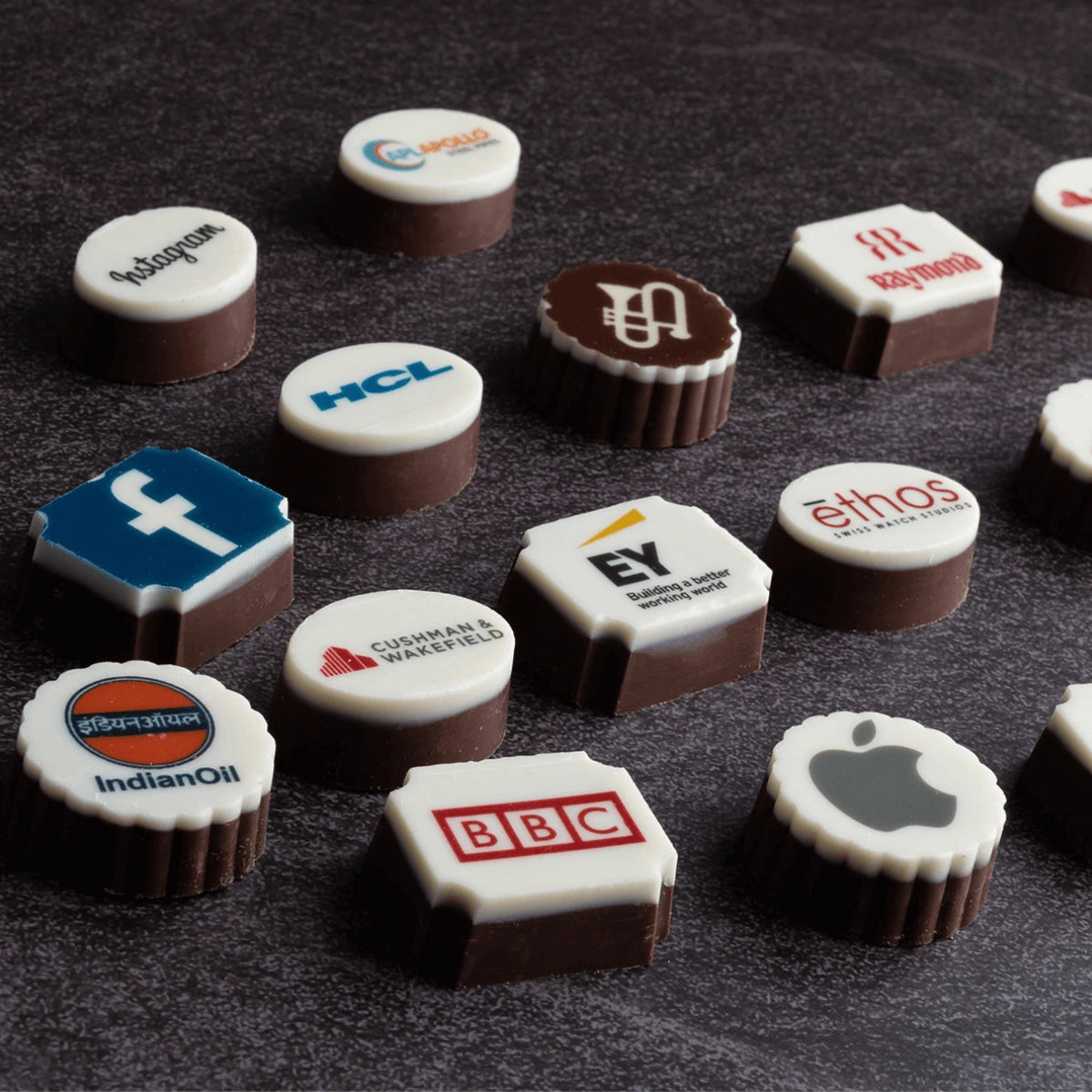
Personalized Corporate Giveaway Chocolates
Custom-branded chocolate giveaway gifts designed to boost visibility at exhibitions and corporate events.
Customize for Your Brand
Data, Research, and Real-World Scenarios: When “No Giveaway” Outperforms Swag
While giveaways are often treated as a default trade show tactic, data and real-world experience suggest a more nuanced reality. Exhibitors who intentionally limit or eliminate giveaways frequently report improvements in lead quality, conversation depth, and post-event engagement.
Industry insights summarized by Exhibitor Magazine reveal that booths offering unrestricted freebies often attract high footfall but low intent. In contrast, exhibitors who removed giveaways altogether saw fewer interactions—but longer conversations and higher follow-up response rates.
This pattern aligns with behavioral research on scarcity. According to McKinsey’s research on the psychology of incentives, rewards that are easy to obtain lose perceived value. When something is freely available without effort or qualification, it stops functioning as a motivator.
For a broader discussion on evolving giveaway effectiveness, read are trade show giveaways still effective.
The “Busy Booth, Empty Pipeline” Trap
One of the most common trade show giveaway mistakes is equating booth traffic with success. A crowded booth feels productive, but activity does not equal impact.
Forbes highlights this disconnect clearly, noting that many exhibitors optimize for attention rather than outcomes. When giveaways become the primary attraction, conversations skew transactional and superficial.
Sales teams frequently report the downstream effects: inflated lead lists, poor CRM data quality, low email engagement, and follow-up fatigue. The giveaway succeeded in attracting people—but failed to attract buyers.
This is why experienced exhibitors increasingly treat giveaways as sales tools, not entertainment. If a giveaway does not support qualification or progression, it often does more harm than good.
Budget-friendly giveaway gifts can still feel premium when chosen strategically—focus on usefulness over quantity. Read more →
The Strategic Alternative: Gifting by Design, Not by Default
Choosing not to give giveaways does not mean abandoning gifting altogether. Instead, it shifts the strategy from volume to intention.
A useful way to approach this decision is through a simple three-question framework:
- Who qualifies for a gift? Decision-makers, influencers, or high-fit prospects.
- When should the gift be given? After a meaningful conversation, demo, or meeting.
- What should the gift communicate? Value, relevance, and brand positioning.
This framework ensures that gifting reinforces credibility rather than diluting it.
For practical ideas on initiating conversations without leading with freebies, see how to use giveaways to start conversations at booths.
Why Premium, Personalized Gifts Behave Differently
Not all giveaways function the same way psychologically. Research published by Harvard Business Review shows that personalization significantly increases recall and perceived value, particularly in B2B environments.
Unlike generic swag, personalized gifts require intention. They are harder to discard, more emotionally resonant, and more likely to be associated with a specific brand interaction.
This is where customized gifting formats—such as chocolates printed with logos, names, or messages—operate differently from mass-produced items. When paired with elegant packaging, they signal care, effort, and selectivity.
Brands like ChocoCraft specialize in this approach, offering premium printed chocolates presented in keepsake boxes that are typically reserved for qualified prospects, post-meeting follow-ups, or key accounts rather than open booth distribution.
Explore corporate gifting formats suitable for selective trade show use here: corporate gifting solutions by ChocoCraft.

Call to Action - Chocolate Box
📦 Box: Logo + bold CTA — “Become Our Distributor” / “Partner With Us”
📝 Message Inside: Contact details + QR code to sales deck or lead form
🍫 Chocolates: One with “Let’s Partner”, one with logo
🎯 Purpose: Turns a premium gift into a partnership trigger—driving real business inquiries, not just brand recall.
Make it for your BrandPractical Decision Guide: Give, Gate, or Skip
Before committing to giveaways at your next event, use this simple decision guide.
Skip Giveaways Entirely When:
- The event has low buyer intent or broad public access.
- Your offering requires trust, education, or long sales cycles.
- Compliance, ethics, or venue rules are restrictive.
- Your budget is better spent on staffing, outreach, or follow-up.
Gate Giveaways When:
- You want to control lead quality.
- Conversations matter more than volume.
- You need a clear qualification step.
Gating can include demo completion, meeting scheduling, or post-event follow-up commitments.
Give Selectively When:
- The event attracts high-intent buyers.
- The gift reinforces brand positioning.
- Distribution is intentional and limited.
Examples of selective gifting include small, personalized chocolate boxes for qualified prospects:
- 2 chocolate corporate gift box
- 4 chocolate corporate gift box
- 9 chocolate corporate gift box
- 12 chocolate corporate gift box
Branding Versus Utility: Why Some Giveaways Fail to Stick
A common misconception is that utility guarantees recall. In reality, highly practical items often fade into the background of daily use.
A phone charger without context is remembered as a charger—not as the brand that gave it. This trade-off between branding and utility is explored in this analysis of the giveaway branding versus utility trade-off.
In contrast, experiential or consumable gifts create a focused moment of attention. Behavioral research shows that single-use, high-attention moments are often more memorable than repeated low-attention exposure.
Sustainability, Waste, and Modern Attendee Expectations
Another reason to reconsider mass giveaways is sustainability. Attendees are increasingly conscious of waste and environmental impact.
Studies summarized by Statista indicate that many attendees actively avoid collecting items they consider unnecessary or disposable.
Brands perceived as wasteful risk negative perception, especially when sustainability messaging clashes with piles of throwaway swag.
For deeper insight, read whether attendees care about sustainable giveaways.
Expert Insight: The Future of Trade Show Gifting
The future of trade show marketing is not about more giveaways—it is about better decisions.
Emerging trends across U.S. exhibitions include smaller gifting lists, CRM-triggered post-event gifting, personalization over volume, and experience-led booth design.
In this environment, exhibitors who continue to rely on mass giveaways risk blending into the noise. Those who exercise restraint and intention stand out.
Conclusion: Strategic Restraint Is a Competitive Advantage
Giving giveaways at trade shows is not mandatory. It is a strategic choice.
Knowing when not to give giveaways protects brand perception, preserves budgets, and respects sales team time. It also creates space for better conversations and stronger recall.
The most effective exhibitors do not ask, “What can we give away?” They ask, “Who is worth gifting—and when?”
Whether you choose to skip giveaways entirely or deploy premium, personalized gifting selectively, the objective remains the same: higher-quality interactions, stronger brand memory, and measurable ROI.
Choose giveaway gifts that naturally attract attention at exhibitions—items that spark curiosity help drive higher booth footfall. Read more →
Key Information
| Decision Factor | What It Means | What to Do Instead |
|---|---|---|
| Low buyer intent event | Attendees are not decision-makers | Skip giveaways and focus on conversations |
| Swag-heavy trade show | Giveaway saturation reduces recall | Stand out with no freebies or gated gifts |
| Premium or complex offering | Requires trust and explanation | Prioritize demos and discussions |
| Budget constraints | Freebies inflate costs without ROI | Reallocate to staffing or follow-up |
| Compliance-heavy industries | Risk of gift violations | Avoid giveaways entirely |
| Sustainability concerns | Attendees avoid wasteful items | Reduce volume or eliminate swag |
| Lead quality issues | High footfall, low conversion | Use selective, post-conversation gifting |
Frequently Asked Questions (FAQs)
1. Should you always give giveaways at trade shows?
No. Giving giveaways at every trade show is a common mistake. At low-intent or swag-saturated events, giveaways often attract freebie seekers rather than buyers. Knowing when to avoid giveaways helps improve lead quality, brand perception, and overall trade show ROI.
2. When is it better to avoid trade show giveaways altogether?
It’s better to avoid giveaways when events lack buyer intent, have open public access, or are heavy on students and job seekers. In these cases, giveaways inflate footfall but dilute conversation quality and increase post-event follow-up fatigue.
3. Can trade show giveaways actually hurt brand perception?
Yes. Generic or low-quality giveaways can make premium brands feel cheap or interchangeable. When surrounded by mass swag, even high-value offerings lose differentiation. Skipping giveaways or using selective premium gifting protects brand positioning.
4. Are trade show giveaways still effective for lead generation?
They can be—but only when used intentionally. Ungated giveaways often produce poor-fit leads. Selective or gated giveaways tied to conversations, demos, or follow-ups are far more effective for generating qualified leads and improving conversion rates.
5. How do I know if a giveaway is a poor fit for my event?
If your booth attracts traffic but few serious conversations, or if attendees only ask about freebies, your giveaway may be the issue. Poor-fit event swag often signals misalignment between your audience, offering, and event goals.
6. What should I do instead of giving freebies at trade shows?
Focus on meaningful conversations, demos, and qualification. Many exhibitors replace mass giveaways with post-meeting gifts, invite-only gifting, or no giveaways at all. This approach improves engagement and positions your brand as intentional and credible.
7. Do premium giveaways work better than cheap swag?
Yes—when used selectively. Premium, personalized gifts outperform cheap swag because they are harder to discard and more memorable. However, even premium giveaways lose impact if distributed without qualification or context.
8. How do giveaways affect trade show ROI?
Giveaways directly impact ROI by influencing lead quality, follow-up effort, and brand recall. Poorly planned giveaways increase costs without improving conversions. Strategic restraint or gated gifting leads to better ROI and more efficient sales pipelines.
9. Is it risky to give giveaways at regulated or compliance-heavy events?
Absolutely. Many industries and venues enforce strict rules around gift value and ethics. Uncontrolled giveaways can create compliance risks. In such cases, skipping giveaways entirely is often the safest and smartest option.
10. What’s the biggest trade show giveaway mistake exhibitors make?
The biggest mistake is assuming giveaways are mandatory. Treating freebies as default rather than strategic tools leads to wasted budgets, low-quality leads, and diluted brand impact. The most successful exhibitors decide when not to give giveaways.
