

When Your Biggest Competitor Is Right Next Door: How to Win on a Crowded Trade Show Floor

When Your Biggest Competitor Is Right Next Door: How to Win on a Crowded Trade Show Floor
Explore Giveaway GiftsKey Takeaways
-
Competing booths are inevitable at trade shows, but professionalism and calm confidence consistently outperform aggressive tactics.
-
Visitors compare booths subconsciously; staff behavior, clarity, and experience matter more than noise or giveaways.
-
Ethical differentiation—rather than confrontation—builds stronger brand recall and higher-quality leads.
-
Premium, thoughtful giveaways used strategically reinforce positioning instead of attracting low-intent traffic.
-
How you handle competitors shapes not just booth success, but post-event follow-up and conversion rates.
Trade shows are competitive by design. Hundreds of brands invest heavily to secure attention, conversations, and qualified leads within a limited physical space. And nothing heightens that pressure faster than discovering your closest competitor is positioned just a few feet away.
Suddenly, every booth decision feels amplified. Visitors move back and forth between stands, compare messaging in real time, and subconsciously judge credibility within seconds. From booth design and staff behavior to giveaways and opening lines, everything becomes part of an unspoken comparison.
In these moments, how you handle competitors at neighboring booths can quietly decide whether your trade show presence drives real business value or simply blends into the noise. The outcome is rarely determined by who is louder or more aggressive. Instead, it’s shaped by who feels more confident, more professional, and more worth engaging with.
The good news is that booth competition does not have to feel adversarial. High-performing exhibitors rely on strategic differentiation, ethical behavior, and thoughtful experience design to stand out—even when surrounded by rivals. If you are planning your next event, reviewing your giveaway strategy early is essential. This guide to corporate giveaway gifts for exhibitions and trade shows is a strong place to begin.
For B2B audiences, premium giveaway gifts signal credibility and help position your brand as high-value and trustworthy. Read more →
Why Booth Competition Is Inevitable at Trade Shows
Trade show floors are intentionally structured to encourage comparison. Event organizers often cluster similar exhibitors together so attendees can efficiently evaluate solutions within the same category. While this benefits visitors, it creates direct, side-by-side competition for exhibitors.
When two or more similar brands are positioned next to each other, attendees instinctively assess several factors within moments of arrival:
- Visual clarity and booth layout
- Staff approachability and energy
- Quality and relevance of giveaways
- Clarity of value proposition
In this environment, small details become decisive. A cluttered booth can feel overwhelming next to a clean, well-structured display. An overly aggressive greeting can feel uncomfortable compared to a calm, confident welcome.
Equally important—but often ignored—is exhibitor etiquette. Experienced trade show teams understand that how you compete matters just as much as how you convert. Poor etiquette, such as intercepting visitors or mimicking a competitor’s pitch, damages credibility and can harm reputation beyond the event itself. These boundaries are explained clearly in this guide on trade show etiquette for exhibitors.
The Core Challenge: Standing Out Without Crossing Ethical Lines
Most exhibitors face the same dilemma: how do you attract attention when competitors are only steps away—without appearing desperate, disruptive, or unprofessional?
Common challenges include:
- A neighboring booth using loud or aggressive sales tactics
- Similar products causing confusion for attendees
- Visitors drifting between booths without committing
- Staff becoming reactive instead of strategic
The instinctive response is often to compete harder—raise voices, offer deeper discounts, or distribute more giveaways. Unfortunately, these tactics often attract low-intent visitors and reduce trust.
High-performing exhibitors take a different approach. They focus on controlling what they can influence: conversation quality, emotional experience, and perceived credibility. Instead of chasing foot traffic, they prioritize meaningful interactions with the right prospects.
One subtle yet powerful differentiator is the quality of giveaways. Premium, customized gifts—such as logo-printed chocolates presented in elegant boxes—encourage visitors to pause, engage, and remember the brand afterward. Rather than grabbing and leaving, attendees associate the experience with thoughtfulness and professionalism.
If competition next door increases footfall unexpectedly, having a traffic plan matters. This resource on managing booth traffic during peak hours offers practical guidance for maintaining control without stress.
Corporate Giveaway Gifts for Expo, Exhibition & Trade Shows
Attract attention and drive brand recall with premium corporate giveaway gifts featuring personalized chocolate branding for expos and trade shows.
Explore Giveaway Gifts NowStrategic Pillars for Managing Competitors at Neighboring Booths
Visual Differentiation Without Visual Noise
When booths are adjacent, restraint often outperforms excess. Clean layouts, consistent branding, and intentional spacing communicate confidence. Overcrowded signage and cluttered counters create cognitive overload, especially when visitors are comparing multiple vendors quickly.
A strong booth communicates one clear idea within seconds. Visitors should immediately understand who you are, who you help, and why it matters—without needing explanation.
Staff Behavior as a Competitive Advantage
People read people faster than signage. Calm, attentive staff consistently outperform aggressive greeters in competitive environments. Visitors feel safer engaging when they don’t feel pressured.
Training teams on effective openings is critical. Frameworks like those explained in what to say in the first 10 seconds at a booth help staff initiate conversations naturally without interrupting visitor intent.
Energy management also matters when competition is close. Fatigue is noticeable and often magnified by comparison. Strategic scheduling and breaks ensure consistency throughout the day, as outlined in staff rotation and energy management at trade shows.
Ethical Lead Capture Over Visitor Interception
Intercepting visitors headed to a neighboring booth is widely considered poor exhibitor etiquette. Instead, focus on qualifying visitors who naturally pause or make eye contact.
Open-ended questions and respectful qualification techniques help ensure conversations are relevant and productive. This approach is detailed in how to qualify visitors without being pushy.
Giveaways That Reinforce Brand Positioning
When competitors distribute generic swag, premium giveaways create immediate contrast. Thoughtfully designed corporate gifts signal attention to detail and brand maturity rather than price competition.
Customized chocolate boxes—featuring logos, messages, or photos—act as tangible reminders long after the event ends. Structured gifting options can be explored through corporate gifting solutions and curated formats such as the 4 chocolate box corporate gift.
End of Part 1.
Advanced On-Floor Tactics When Competitors Are Close
Once the exhibition floor opens, competitive dynamics shift quickly. Neighboring booths react to traffic patterns, attendee behavior, and each other’s tactics in real time. This is where preparation turns into execution—and where many exhibitors either gain or lose control.
One of the most effective strategies in close-proximity competition is maintaining emotional and visual stability. When a competitor becomes louder, more aggressive, or overly promotional, resisting the urge to mirror that behavior often works in your favor. Visitors subconsciously associate calm confidence with credibility, especially in B2B environments where decision-makers value clarity over hype.
Micro-interactions play an outsized role in these moments. Offering a seat, acknowledging a visitor by name, summarizing value in one sentence, or presenting a customized takeaway after a conversation can create meaningful contrast without confrontation.
Protecting conversation space is equally important. If competitors attempt to hover or interrupt, trained staff should naturally pivot inward—stepping closer to the visitor, lowering their voice slightly, and continuing the discussion. This subtle body language signals professionalism and discourages interference without escalating tension.
Visitors who say they are “just looking” are often comparison-shopping, especially when booths are adjacent. Handling these moments with respect rather than pressure improves recall. Practical techniques for these interactions are outlined in how to handle just looking attendees.
In rare cases where competitors cross ethical boundaries—blocking access, copying signage, or intercepting visitors—documentation and calm escalation through event organizers is more effective than direct confrontation. Teams that prepare for these scenarios using frameworks such as crisis management at trade shows protect both brand reputation and staff morale.
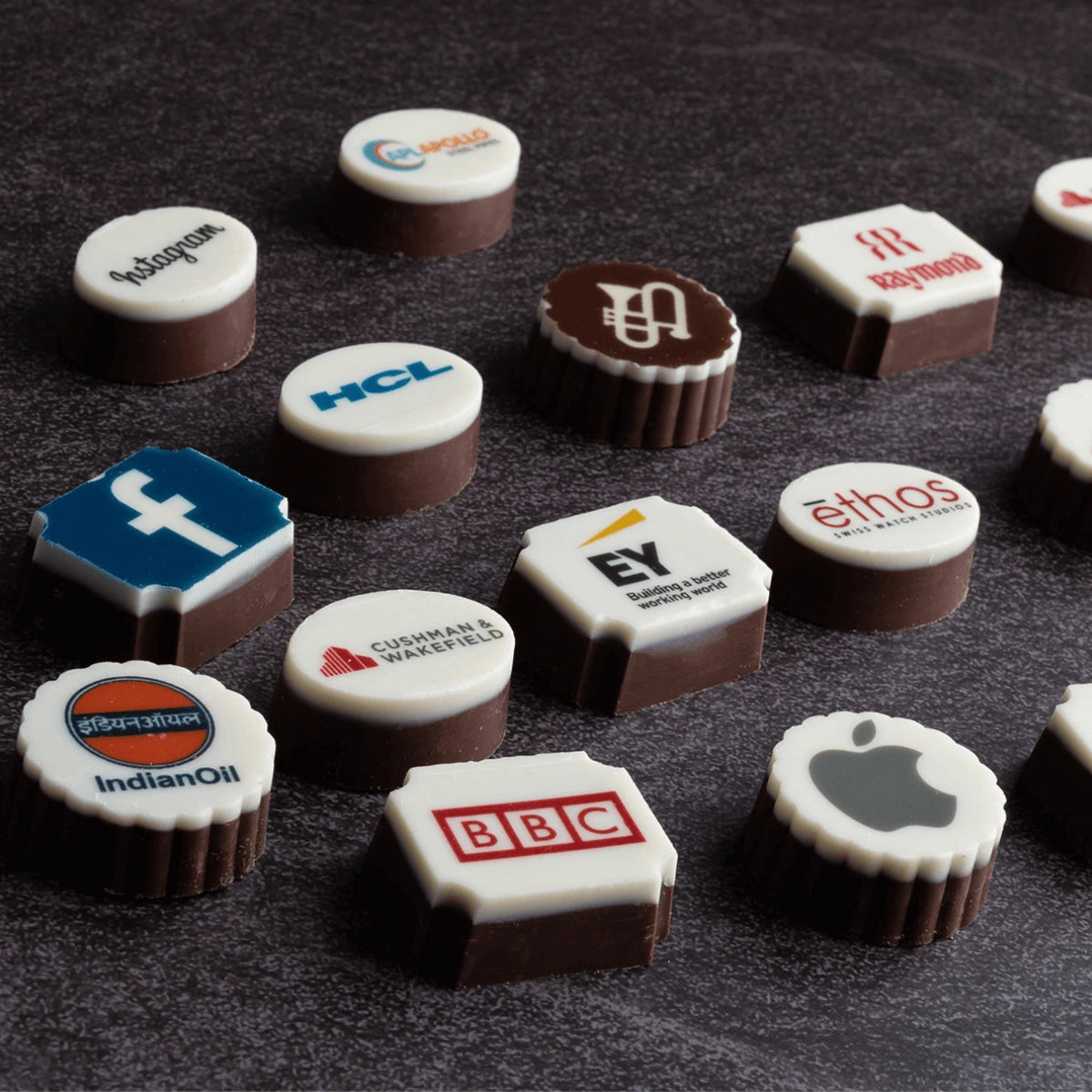
Personalized Corporate Giveaway Chocolates
Custom-branded chocolate giveaway gifts designed to boost visibility at exhibitions and corporate events.
Customize for Your BrandReal-World Scenarios and How Smart Exhibitors Respond
Competitive pressure looks different depending on the situation. Experienced exhibitors adapt without compromising brand integrity.
Scenario 1: The Freebie Flood. A neighboring booth distributes large volumes of low-cost swag to draw crowds. Rather than competing on quantity, high-performing brands wait until a conversation is qualified before offering a premium takeaway. This results in fewer giveaways, higher perceived value, and stronger post-show engagement.
Scenario 2: The Copycat Booth. Competitors replicate messaging, taglines, or visuals mid-show. Seasoned teams avoid public reactions. Instead, they lean into storytelling—using examples, use cases, and staff-led explanations that are difficult to copy quickly.
Scenario 3: Traffic Spillover. Crowds form at a neighboring booth and spill into your space. Rather than pushing sales conversations, smart teams manage flow calmly and qualify gently. Insights from crowd psychology at trade shows explained help teams maintain control while benefiting from increased visibility.
Across these scenarios, the winning factor is not aggression but clarity. Attendees remember who helped them think, not who competed the loudest.
Budget-friendly giveaway gifts can still feel premium when chosen strategically—focus on usefulness over quantity. Read more →
What Research Says About Competing in Close Quarters
Independent business research consistently reinforces what experienced exhibitors observe on the floor.
Harvard Business Review has explored how trust is built through behavior and experience rather than persuasion alone. Their analysis on selling in high-friction environments highlights why aggressive tactics often backfire. Read the Harvard Business Review article.
MIT Sloan Management Review emphasizes that buyers rely heavily on behavioral cues when comparing similar vendors in person. Calm interactions and perceived competence often outweigh promotional messaging. See MIT Sloan Management Review insights.
McKinsey has also noted that small design and experience details disproportionately influence buyer perception in competitive B2B environments. Explore McKinsey’s analysis.
From a measurement perspective, Forbes consistently reports that trade show ROI is driven more by post-event recall and follow-up quality than booth traffic alone. Forbes on measuring trade show ROI.
Statista data further supports the value of experiential marketing, showing higher brand recall compared to traditional promotional formats. Statista research on experiential marketing.
Turning Booth Competition Into a Long-Term Advantage
Competition does not end when the show closes. In fact, post-event follow-up is where professional differentiation often becomes most visible.
Teams that handled competition gracefully tend to see higher response rates in follow-up outreach. Attendees remember brands that felt composed, respectful, and thoughtful on the floor.
Including a tactile reminder can significantly strengthen this recall. Customized chocolate gifts—branded with logos, messages, or photos—extend the booth experience beyond the venue. Selecting gift formats based on lead value reinforces strategic intent rather than blanket promotion.
- 6 chocolate box corporate gift
- 9 chocolate box corporate gift
- 12 chocolate box corporate gift
- 18 chocolate box corporate gift
The objective is not gifting for its own sake, but reinforcement. A well-timed, well-presented takeaway strengthens memory and signals professionalism long after the event ends.
Future Outlook: Competing Ethically on the Event Floor
As trade shows mature, competition is shifting away from spectacle and toward substance. Buyers increasingly expect respectful engagement, clarity of positioning, and meaningful experiences—especially in competitive U.S. markets.
Industry experts anticipate greater emphasis on staff training, emotional intelligence, and premium personalization rather than mass promotions. In this environment, ethical competition is no longer just polite—it is strategic.

Call to Action - Chocolate Box
📦 Box: Logo + bold CTA — “Become Our Distributor” / “Partner With Us”
📝 Message Inside: Contact details + QR code to sales deck or lead form
🍫 Chocolates: One with “Let’s Partner”, one with logo
🎯 Purpose: Turns a premium gift into a partnership trigger—driving real business inquiries, not just brand recall.
Make it for your BrandConclusion
Handling competitors at neighboring booths is not about winning confrontations. It is about winning comparisons.
Brands that remain calm, differentiate through experience, and respect exhibitor etiquette consistently outperform louder competitors in terms of trust, recall, and lead quality.
- Confidence and composure outperform noise
- Experience matters more than aggressive promotion
- Premium, thoughtful giveaways reinforce brand positioning
- Competitors provide context, not threats
On a crowded trade show floor, professionalism is the most reliable competitive advantage—and the one buyers remember.
Choose giveaway gifts that naturally attract attention at exhibitions—items that spark curiosity help drive higher booth footfall. Read more →
Key Information
| Aspect | What It Means | Why It Matters |
|---|---|---|
| Booth Proximity | Competitors placed side by side by design | Forces instant brand comparison |
| Visitor Behavior | Attendees compare booths emotionally, not logically | First impressions decide engagement |
| Staff Conduct | Calm, respectful conversations outperform pressure | Builds trust in crowded environments |
| Giveaway Strategy | Premium, relevant gifts vs generic swag | Improves recall and lead quality |
| Ethical Boundaries | Avoid interception and copying | Protects brand credibility |
| Traffic Management | Control flow during competitor-driven surges | Prevents chaos and lost opportunities |
| Post-Event Impact | Booth experience affects follow-ups | Influences long-term ROI |
Frequently Asked Questions (FAQs)
1. How do you deal with competitors at neighboring booths without being pushy?
The key is focusing on your own booth experience instead of reacting to competitors. Calm staff, clear messaging, and respectful conversation attract serious visitors. Avoid intercepting attendees or matching aggressive tactics, as professionalism builds stronger trust and better-quality trade show leads.
2. What if a competitor is louder or more aggressive than our booth?
Louder booths often attract attention, but not always the right attention. Many decision-makers prefer calm, confident brands. Maintaining composure, lowering vocal volume, and offering thoughtful interactions helps your booth stand out as credible and premium rather than desperate or sales-driven.
3. Is it okay to compete directly with a neighboring booth at a trade show?
Healthy competition is expected, but direct interference is not. Ethical competition means differentiating through messaging, experience, and value—not blocking access, copying pitches, or pulling visitors away. Exhibitor etiquette plays a major role in how your brand is perceived long after the event.
4. How can we attract visitors when competitors are right next to us?
Attraction comes from clarity, not confrontation. A clear value proposition, welcoming body language, and relevant giveaways encourage visitors to pause naturally. Visitors often compare booths side by side, so consistency and confidence work better than aggressive calls-to-action.
5. What should staff do if competitors try to interrupt conversations?
Staff should remain calm and continue the conversation by subtly shifting body position inward and lowering their voice. This signals professionalism and discourages interference without escalation. If behavior crosses boundaries, document it and involve event organizers rather than confronting competitors directly.
6. Do giveaways really help when multiple competitors are nearby?
Yes—when used strategically. Premium, customized giveaways reinforce brand positioning and encourage meaningful engagement. Generic swag often attracts low-intent visitors. Thoughtful gifts given after a qualified conversation extend brand recall beyond the trade show floor.
7. How do you handle “just looking” attendees in competitive booths?
“Just looking” often means comparison-shopping. Respect their intent with a soft opener instead of a pitch. This builds comfort and memory. When handled well, these visitors are more likely to return or follow up after evaluating multiple exhibitors.
8. What are common mistakes exhibitors make with neighboring competitors?
Common mistakes include copying competitor messaging, raising voice levels, intercepting visitors, or over-giving freebies. These behaviors reduce trust and attract poor leads. Experienced exhibitors focus inward—on staff quality, experience, and controlled engagement.
9. How does booth competition affect post-event follow-ups?
Visitors remember how a brand made them feel. Booths that stayed calm, respectful, and helpful tend to see higher follow-up response rates. Aggressive booths may get traffic, but often struggle with post-event engagement and conversions.
10. What is the best long-term strategy for booth competition management?
The best strategy is treating competitors as context, not threats. Clear positioning, ethical behavior, trained staff, and thoughtful takeaways create differentiation. Over time, this approach strengthens brand reputation, improves ROI, and builds trust across multiple events.
